Middleborough, Massachusetts
Results for a Lifetime
Having a beautiful, confident smile is something everyone deserves, which is why we’re dedicated to providing our patients with an exceptional dental experience. We want to give you a smile you’ll be proud to share for the rest of your life.
Welcome
Joseph B. Flaherty III DMD, PC — Family & Cosmetic Dentistry
The Middleboro, MA practice of Joseph B. Flaherty III, DMD, P.C. takes a patient-centered approach to dentistry. Each individual receives treatment planning considerations that take into account their overall health, as well as their dental health and dental history. It is our goal to give our patients a higher quality of life by improving their overall health through state-of-the-art oral healthcare.
Dr. Flaherty and our team want you to feel comfortable with your recommended treatment and leave each visit at the office feeling that your needs were met completely. We offer only the best, clinically-proven treatments and services, from simple fillings and cosmetic veneers to implants, implant restorations, crowns, and dentures.
With exceptional knowledge and experience, Dr. Flaherty and our team are here to make your oral health excellent. Contact our Middleboro dental office to schedule an appointment!



About Us
Meet Dr. Joseph Flaherty
“Dentistry has been a wonderful profession for me so far, and I'm looking forward to being involved in dentistry for many years to come. I feel as though it is a privilege to be able to help and interact with a variety of people on a daily basis, and build relationships to last throughout my career.”— Dr. Flaherty
Dr. Joseph Flaherty’s commitment to his profession involves always providing the highest level of care possible for each individual patient. During his education, he realized his desire to work in a profession that would give him the opportunity to directly help and heal individuals on an everyday basis. This, along with his drive to combine his scientific knowledge, creativity, and compassion, drew Dr. Flaherty to the field of dentistry.
Education and Continuing Education
- 2006Bachelor of Science in Biochemistry – Boston College
- 2010Doctorate of Dental Medicine – Boston University
- 2011General Practice Residency – Eastern Maine Medical Center
Dr. Flaherty is excited to practice dentistry in an age where dental technology is becoming more and more advanced, allowing him to deliver high-quality care with increasing efficiency. As a regular participant in Boston's Yankee Dental Congress, the largest annual dental exhibition in New England, Dr. Flaherty stays up to date on the latest continuing education courses and learns about the newest innovations in dental technology. He is a firm believer in the benefits of utilizing advanced techniques that are backed by scientific research to help provide the highest level of dental care possible.
Professional Affiliations
As a member of the Massachusetts Dental Society Membership Committee, Dr. Flaherty works to educate the dental community about the benefits of organized dentistry as well as recruit dental students and recent dental school graduates to the society. He is also a member of the American Dental Association and the South Shore District Dental Society.
Outside the Office
Dr. Flaherty spent his youth growing up in Middleboro. He attended Middleboro schools and played baseball, soccer, and football in the town. He later graduated from Sacred Heart High School in Kingston. He currently resides in Plympton.
In his spare time, Dr. Flaherty enjoys playing golf, working out and spending time with friends and family. He is also a lifelong fan of the Boston Red Sox, Bruins, Patriots and the Boston College Eagles.

Our People
Meet the Team
Chris
Registered Dental Hygienist (RDH)
Juliana
Registered Dental Hygienist (RDH)
Nadia
Registered Dental Hygienist (RDH)
Meredith
Registered Dental Hygienist (RDH)
Heather
Certified Dental Assistant (CDA)
Danielle
Certified Dental Assistant (CDA)
Maureen
Office Manager
Fran
Front Office
New Patients
Your First Visit Is All About You

Office Visits
Our practice is committed to providing you and your family with safe, gentle, high-quality dental care. We understand that you, or your child, may feel anxious about visiting the dentist. We are sensitive to your needs, and it is our goal to make you feel comfortable visiting our practice while providing the best care possible.
Your first visit is all about you – your comfort, your happiness, and your health.
During your first visit, we will review your dental and medical history forms, and take X-rays of your teeth and mouth. One of our hygienists will clean and polish your teeth, checking your teeth and gums for any cavities or early signs of tooth decay or gingivitis. Then, the doctor will meet with you to discuss your X-rays, help you create your own individual treatment plan, and answer any questions that you may have.
Bring your smile, but also remember to bring these with you to your first appointment:
- Your completed patient information form
- Your insurance card
Regular checkups are an important part of maintaining a healthy smile!
The American Dental Association recommends visiting your dentist every six months for regular checkups and routine teeth cleanings to keep your teeth and gums healthy. We understand that you have a busy schedule, so when you're preparing to visit the dentist, please remember that your appointments can last between 45 and 90 minutes.
Financial Information
The cost of your treatment will vary depending on your individual needs and treatment plan. We will discuss with you the cost of your treatment and each of your available payment options before you begin, so that you can make the best choice for you.
Affordable Payment Plans
Your smile is yours forever, and we want to make it as easy as possible for you to receive the best dental care when you need it.
Our practice accepts most major credit cards and insurance plans.
Our office staff is always available to help you with insurance claims and paperwork. We'll work with your insurance provider to make sure that your coverage meets your needs and your budget. Please let us know if you have any questions about your insurance coverage.

Appointment Request
The first step toward achieving a beautiful, healthy smile is to schedule an appointment. Call our office and our scheduling coordinator will get you booked.
If you need to cancel or reschedule an existing appointment, or if you require immediate attention, please contact our practice directly.
Call (508) 947-1955Post-Appointment Survey
We appreciate you choosing our practice, and we are committed to making sure that your time spent with us is as comfortable and fulfilling as possible. In order to continue providing the kind of care that keeps our patients smiling, we encourage your comments and suggestions about the treatments and personal care you've received while visiting our practice.
What was your favorite thing about being at our practice? What areas could we improve upon to make your experience even more enjoyable? Tell us at your next visit or give the office a call.
General Dentistry
Common Procedures
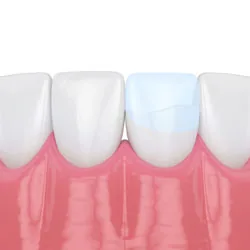
Bonding is a conservative way to repair slightly chipped, discolored, or crooked teeth. During dental bonding, a white filling is placed onto your tooth to improve its appearance. The filling “bonds” with your teeth, and because it comes in a variety of tooth-colored shades, it closely matches the appearance of your natural teeth.
Tooth bonding can also be used for teeth fillings instead of amalgam fillings. Many patients prefer bonded fillings because the white color is much less noticeable than the silver amalgam fillings. Bonding fillings can be used on front and back teeth depending on the location and extent of tooth decay.
Bonding is less expensive than other cosmetic treatments and usually can be completed in one visit to our office. However, bonding can stain and is easier to break than other cosmetic treatments such as porcelain veneers. If it does break or chip, tell your doctor. The bonding generally can be easily patched or repaired in one visit.
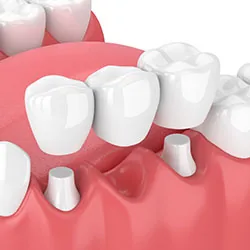
A bridge may be used to replace missing teeth, help maintain the shape of your face, and alleviate stress on your bite.
A bridge replaces missing teeth with artificial teeth, looks great, and literally bridges the gap where one or more teeth may have been. Your bridge can be made from gold, alloys, porcelain, or a combination of these materials, and is bonded onto surrounding teeth for support.
The success of any bridge depends on its foundation — the other teeth, gums, or bone to which it is attached. Therefore, it's very important to keep your existing teeth, gums, and jaw healthy and strong.
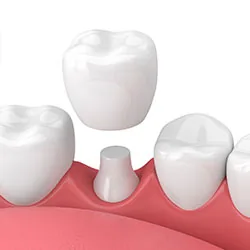
Crowns are a cosmetic restoration used to strengthen a tooth or improve its shape. Crowns are most often used for teeth that are broken, worn, or partially destroyed by tooth decay.
Crowns are "cemented" onto an existing tooth and fully cover the portion of your tooth above the gum line. In effect, the crown becomes your tooth's new outer surface. Crowns can be made of porcelain, metal, or both. Porcelain crowns are most often preferred because they mimic the translucency of natural teeth and are very strong.
Crowns or onlays (partial crowns) are needed when there is insufficient tooth strength remaining to hold a filling. Unlike fillings which apply the restorative material directly into your mouth, a crown is fabricated away from your mouth. Your crown is created in a lab from your unique tooth impression which allows a dental laboratory technician to examine all aspects of your bite and jaw movements. Your crown is then sculpted just for you so that your bite and jaw movements function normally once the crown is placed.
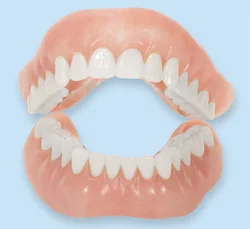
Dentistry is all about smiles, and having a confident, healthy, beautiful smile is important even for patients wearing dentures. Our practice provides personalized denture services that meet the needs and comfort levels of our patients. All of our patients are unique and we create one-of-a-kind dentures that feel good and look natural.
What are dentures?
Dentures are natural-looking replacement teeth that are removable. There are two types of dentures: full and partial.
Full dentures are given to patients when all of the natural teeth have been removed. Conventional full dentures are placed after the gum tissue has healed, which can take several months. Immediate full dentures are placed immediately after the teeth have been removed and may require frequent adjustments during the first couple of months of use.
Partial dentures are attached to a metal frame that is connected to your natural teeth and are used to fill in where permanent teeth have been removed. Partial dentures are considered a removable alternative to bridges.
How do I know if dentures are the right choice for me?
Dentures are not for everyone. If you're interested in learning more about dentures and want to know if they are the right choice for you, please schedule an appointment. Our team will be happy to answer any questions you might have, and can determine the best course of treatment for your ongoing dental health.
Caring for your dentures
Dentures, just like natural teeth, require daily maintenance to stay clean and keep bacteria from growing inside of your mouth. Keep your dentures clean and your smile healthy:
- When handling your dentures, stand over a clean, folded towel or a sink full of water. This way, if you accidentally drop your dentures, they are less likely to break.
- Your dentures are not immune from plaque and tartar build-up, so it's important that you brush your dentures every day. To brush your dentures, use a soft-bristled brush and gently brush the surfaces of the dentures, being careful not to break or bend the plastic. Between brushings, it's important to rinse your dentures after each meal.
- Use a gentle cleanser to clean your dentures. Many toothpastes, household cleaners, and mouthwashes can be too hard on your dentures, so it is recommended that you use a mild hand or dish soap to get your dentures clean. Be sure to check for the American Dental Association (ADA) seal of approval to choose products that are safe for your dentures, or ask your dentist about the best cleanser for you.
- Clean your gums and tongue every day.
If by chance your dentures do break, please contact our practice and schedule an appointment as soon as possible. Broken dentures that don't fit properly can cause irritation to your gums and mouth. Also, remember to continue scheduling regular dental checkups every six months to make sure that your smile stays healthy for many years to come.
Traditional dental restoratives, or fillings, are most often made of silver amalgam. The strength and durability of this traditional dental material makes it useful for situations where restored teeth must withstand extreme forces that result from chewing, often in the back of the mouth.
Newer dental fillings include ceramic and plastic compounds that mimic the appearance of natural teeth. These compounds, often called composite resins, are usually used on the front teeth where a natural appearance is important, but they can also be used on the back teeth depending on the location and extent of the tooth decay.
What’s right for me?
Several factors influence the performance, durability, longevity, and expense of dental restorations, including:
- The components used in the filling material
- The amount of tooth structure remaining
- Where and how the filling is placed
- The chewing load that the tooth will have to bear
- The length and number of visits needed to prepare and adjust the restored tooth
Before your treatment begins, your doctor will discuss with you all of your options and help you choose the best filling for your particular case. In preparation for this discussion it may be helpful to understand the two basic types of dental fillings — direct and indirect.
Direct fillings are fillings placed into a prepared cavity in a single visit. They include silver amalgam, glass ionomers, resin ionomers, and composite (resin) fillings. The dentist prepares the tooth, places the filling, and adjusts it in one appointment.
Indirect fillings generally require two or more visits. They include inlays, onlays, and veneers fabricated with gold, base metal alloys, ceramics, or composites. They are used when a tooth has too much damage to support a filling but not enough to necessitate a crown. During the first visit, the dentist prepares the tooth and makes an impression of the area to be restored. The dentist then places a temporary covering over the prepared tooth. The impression is sent to a dental laboratory, which creates the dental restoration. At the next appointment, the dentist cements the restoration into the prepared cavity and adjusts it as needed.
Using Fluoride to Protect Your Teeth
You brush your teeth twice a day, floss regularly, and visit the dentist every six months, but did you know that rinsing with fluoride — a mineral that helps prevent cavities and tooth decay — also helps keep your teeth healthy and strong?
Fluoride is effective in preventing cavities and tooth decay by coating your teeth and preventing plaque from building up and hardening on the tooth's surface.
Fluoride comes in two varieties, systemic and topical:
Systemic fluoride is ingested, usually through a public water supply. While teeth are forming under the gums, the fluoride strengthens tooth enamel, making it stronger and more resistant to cavities.
Topical fluoride can be applied to help prevent caries (cavities) on teeth present in the mouth. It is delivered through toothpaste, mouthwash, and professional fluoride applications.
Receiving a fluoride treatment from your dentist
A fluoride treatment in your dentist's office takes just a few minutes. After the treatment, patients may be asked not to rinse, eat, or drink for at least 30 minutes in order to allow the teeth to absorb the fluoride. Depending on your oral health or your doctor's recommendation, you may be required to have a fluoride treatment every three, six, or 12 months. Your doctor may also prescribe an at-home fluoride product such as a mouthwash, gel, or antibacterial rinse.
How to choose the right fluoride treatment
When choosing your own at-home fluoride product (such as toothpaste or mouthwash), always check for the American Dental Association's (ADA) seal of acceptance. Products marked with the ADA seal of approval have been carefully examined by the ADA, and approved based on safety and effectiveness. Take care of your teeth and smile bright with dental fluoride treatments!
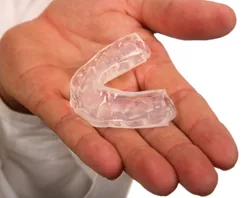
Whether you wear braces or not, protecting your smile while playing sports is essential. Injuries to the mouth and jaw are some of the most common injuries received by athletes. Mouthguards help protect your teeth and gums. If you participate in basketball, boxing, hockey, football, gymnastics, lacrosse, martial arts, racquetball, rugby, track and field, skateboarding, skiing and snowboarding, skydiving, soccer, surfing, volleyball, water polo, weightlifting or wrestling, it is recommended by the American Dental Association that you wear a mouthguard.
Types of Mouthguards
Choosing the right mouthguard is important. There are three basic types of mouthguards: the pre-made mouthguard, the "boil-and-bite" fitted mouthguard, and a custom-made mouthguard. When you choose a mouthguard, be sure to pick one that is tear-resistant, well fitted for your mouth and easy to keep clean. Also make sure it does not prevent you from breathing properly during use. If you wear braces or a retainer, it is imperative for you to wear a mouthguard. Your dentist can show you how to wear a mouthguard properly and how to choose the right mouthguard to protect your smile.
Taking Care of Your Mouthguard
Similar to a retainer, braces, or any other special dental appliance, it is important to take care of your mouthguard by storing it properly and keeping it clean. You should also know when to replace your old mouthguard with a new one. Here are a few simple ways to keep your mouthguard clean and working correctly:
- Gently scrub your mouthguard after each use with a toothbrush and toothpaste.
- Store your mouthguard in a protective case.
- Do not leave your mouthguard in the sun or in hot water; it may melt or become deformed.
- Replace your mouthguard at the beginning of every new sports season. You should also replace your mouthguard if you notice it has become worn and no longer fits properly.
- Do not wear a retainer with your mouthguard. If you wear braces, your dentist will help design a mouthguard to protect your teeth and your braces.
- Do not chew on or cut pieces off of your mouthguard.
- Bring your mouthguard to each dental checkup, and your dentist can check to make sure it's still in good shape.
Our goal is to help minimize your chances of a sports related injury. Be sure to ask your dentist about mouthguards at your next dental checkup — GO TEAM!
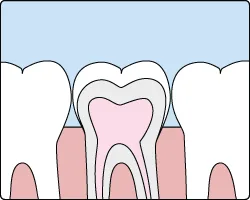
Sometimes brushing is not enough, especially when it comes to those hard-to-reach spots in your mouth. It is difficult for your toothbrush to get in between the small cracks and grooves on your teeth. If left alone, those tiny areas can develop tooth decay. Sealants give your teeth extra protection against decay and help prevent cavities.
Dental sealants are plastic resins that bond and harden in the deep grooves on your tooth's surface. When a tooth is sealed, the tiny grooves become smooth and are less likely to harbor plaque. With sealants, brushing your teeth becomes easier and more effective.
Sealants are typically applied to children's teeth after their permanent teeth have erupted as a preventive measure against tooth decay. However, adults can also receive sealants on healthy teeth. It is more common to seal permanent teeth rather than baby teeth, but every patient has unique needs, and your dentist will recommend sealants on a case-by-case basis.
Sealants typically last from three to five years, although it is fairly common to see adults with sealants still intact from childhood. A dental sealant only provides protection when it is fully intact so if your sealants come off, let your dentist know, and schedule an appointment for your teeth to be resealed.
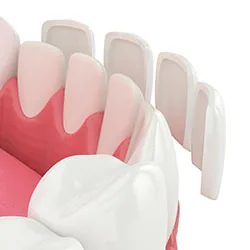
You no longer need to hide your smile because of gaps, chips, stains, or misshapen teeth. With veneers, you can easily correct your teeth’s imperfections to help you have a more confident, beautiful smile. Veneers are natural in appearance and are a perfect option for patients wanting to make minor adjustments to the look and feel of their smile.
Veneers are thin, custom-made shells made from tooth-colored materials such as porcelain. They are designed to cover the front side of your teeth. To prepare for veneers, your doctor will create a unique model of your teeth. This model is sent to a dental technician who creates your veneers. Before placing your new veneer, your doctor may need to conservatively prepare your tooth to achieve the desired aesthetic result.
When your veneers are placed, you’ll be pleased to see that they look like your natural teeth. While veneers are stain-resistant, your doctor may recommend that you avoid coffee, tea, red wine, and tobacco to maintain the beauty of your new smile.
If you often wake up with jaw pain, earaches, or headaches, or if you find yourself clenching or grinding your teeth, you may have a common condition called bruxism.
Although the causes of bruxism are not really known, several factors may be involved. Stressful situations at home, school, or work, problems in sleeping, an abnormal bite, and crooked or missing teeth may contribute to bruxism. Many people do not even know that they grind their teeth, as it often occurs when one is sleeping. If not corrected, bruxism can lead to broken teeth, cracked teeth, damaged restorations, or even tooth loss.
There is an easy, non-invasive treatment for bruxism: nightguards. Nightguards are an easy way to prevent the wear and damage that teeth-grinding cause over time. Custom-made by your dentist from soft material to fit your teeth, a nightguard is inserted over your top or bottom arch and prevents contact with the opposing teeth.
Choosing the right mouthguard is essential. There are three basic types of mouthguards: the pre-made nightguard, the “boil-and-bite” nightguard, and a custom-made nightguard from our office. When you choose a nightguard, be sure to pick one that is tear-resistant, comfortable and well fitted for your mouth, easy to keep clean, and does not prevent you from breathing properly. A nightguard created in our office will fit all these requirements, as it will be custom-made just for your teeth.
Advanced Care
Dental Services
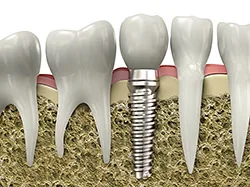
People are living longer than ever, and while regular brushing, flossing, and checkups allow many of us to maintain our natural smiles for a lifetime, sometimes our teeth just can't keep up. If you've lost a tooth (or a few teeth) due to injury or disease, dental implants can rejuvenate both your smile and your oral health.
An implant is a synthetic tooth root in the shape of a post that is surgically placed into the jawbone. The “root” is usually made of titanium: the same material used in many replacement hips and knees, and a metal that is well-suited to pairing with human bone. A replacement tooth is then fixed to the post. The tooth can be either permanently attached or removable. Permanent teeth are more stable and feel more like natural teeth.
The ideal candidate for implants is a non-smoker who has good oral health, including a sufficient amount of bone in the jaw, and healthy gums with no sign of gum disease.
Single or Multiple Implants
Implants are versatile. If you are only missing one tooth, one implant plus one replacement tooth will do the trick. If you are missing several teeth in a row, a few strategically placed implants can support a permanent bridge (a set of replacement teeth). Similarly, if you have lost all of your teeth, a full bridge or full denture can be permanently fixed in your mouth with a strategic number of implants.
Advantages Over Dentures or Bridges
Conventional bridges and dentures are not fixed to the bone, and can therefore be unstable. This can make it difficult to eat or smile with confidence. Implants not only look more natural, but feel and act more like normal teeth, with a stronger biting force. And because they don't directly rely on neighboring teeth for support, implants don't compromise the health of your natural teeth. In fact, bridges are only expected to last seven to ten years, even less with root canals, whereas implants will typically last a lifetime.
Post-Treatment Care
Consider your replacement teeth to be the same as natural teeth. They require the same daily brushing and flossing, and the same amount of regular checkups. Just like your natural teeth, the better you take care of your replacements, the longer they will last.
Implant Services
Our implant services include:
- Sinus Lift Augmentation: Often the sinuses will enlarge following loss of the upper back teeth. This can preclude placement of dental implants in the upper back areas of the mouth, since the sinus is an air-filled space and dental implants need to be surrounded by solid bone. A sinus lift augmentation/graft is a surgical procedure that restores the sinus cavity to its original size, and replaces the bone that has been lost as a result of the enlarged sinus. This new bone graft typically takes nine to 12 months to heal before the dental implants can be placed into the grafted bone.
- Autogenous Bone Grafting: Occasionally, the ideal areas for dental implants do not have sufficient bone quantity to support the implants. In these cases, it is often necessary to “borrow” bone from another area of your mouth and graft it into the deficient area. Often, the area of choice is from the chin or in the back of the jaw where your wisdom teeth used to be.
- Implant Site Development: When a tooth needs to be removed due to infection, it is not uncommon to have lost bone around the infected tooth. In these cases, various types of bone grafting can be done at the same time the tooth is removed to facilitate the placement of a dental implant at a later date.
- Computer-Enhanced Treatment Planning: We have special software on our computer that allows us to evaluate your dental CT scan in three dimensions for bone quality, bone quantity, and bone location, enabling the best possible placement of your dental implants. This also allows us to work closely and smoothly with your restorative dentist to ensure an ideal result where your dental implants are concerned.
- Implant Maintenance: Once your dental implant restoration is completed, it is important to keep the area clean and infection-free. Dental implants can accumulate plaque and tartar just as teeth can. Whether you have just one tooth replaced by an implant or several, a professional cleaning schedule will be necessary to keep your implants healthy. The time interval for these professional cleanings will be determined by your individual needs.
Implant Restoration
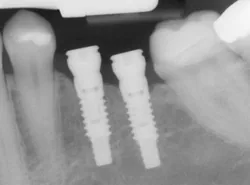
If you have missing teeth, it is crucial to replace them. Without all your teeth, chewing and eating can destabilize your bite and cause you discomfort. When teeth are missing, your mouth can shift and even cause your face to look older. Implants are a great way to replace your missing teeth and, if properly maintained, can last a lifetime!
An implant is a new tooth made of metal and porcelain that looks just like your natural tooth. It's composed of two main parts: One part is the titanium implant body that takes the place of the missing root, and the second part is the tooth-colored crown that is cemented on top of the implant. With periodontal treatment, you can smile confidently knowing that no one will ever suspect you have a replacement tooth.
In addition to tooth replacement, implants may be used to anchor dentures, especially lower dentures that tend to shift when you talk or chew. For patients with removable partial dentures, implants can replace missing teeth so that you have a more natural-looking smile.
We are your local CEREC dentist for single-visit tooth restorations. Why go to the dentist a second time if you don't have to?
What is CEREC?
CEREC is a technology for restoring damaged teeth, and this restoration can be completed in a single visit to the doctor's office. It makes your teeth stronger and more beautiful, all while keeping your teeth looking natural. The restoration is metal-free, and the high-grade ceramic material is compatible with the natural tissue found in your mouth.
The CEREC Process
During your appointment, you and your doctor will discuss the details of the procedure and your doctor will answer any questions you may have. Your doctor will then use a special 3D imaging camera to take a photo of your tooth. Using CEREC's proprietary software, your restoration will be designed according to your tooth's appropriate form and function. Then, CEREC will use diamond burs to create your restoration out of a piece of ceramic. Finally, the ceramic restoration is bonded to your tooth using state-of-the-art adhesive dentistry.
Why Choose CEREC?
There are many advantages of using CEREC over traditional crown technology.
- Time: CEREC crowns are made in one visit, saving you considerable time away from your job and family.
- Comfort: With CEREC, there is no need for a temporary crown, eliminating significant potential discomfort.
- Aesthetics: The strong, tooth-colored ceramic materials of CEREC restore your teeth to their natural strength, beauty, and function, and closely match the composition of your natural tooth structure.
- Strength: Milled ceramic is stronger than the traditional method of layering and pressing, so your smile will stay beautiful for years!
- Fillings: CEREC material and technology can also be used for fillings. Since these fillings are made out of porcelain, they are more durable than white composite fillings.
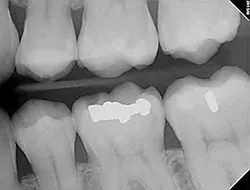
Using the most advanced dental technology possible is just as important as staying up-to-date on the latest treatment techniques. Because our practice is dedicated to providing you with the safest and most convenient treatment options available, we utilize advanced digital X-ray technology in our office.
Digital X-rays provide several advanced imaging options designed to save time, provide clearer dental photos, and expose patients to less radiation than traditional X-ray technology.
Our practice is focused on making your dental experience as comfortable as possible. At your next appointment, we'll be happy to answer any questions you may have.
Our office is not only dedicated to your smile, we're also dedicated to your overall wellness. We take a holistic approach to your dental care, which includes an oral cancer screening as a part of your regular exam. Like many kinds of cancer, oral cancer can be life-threatening if not diagnosed and treated early.
We have the skills and tools to ensure that early signs and symptoms of oral cancer and pre-cancerous conditions are identified. While these symptoms may be caused by other, less serious problems, it is very important to visit our office to rule out the possibility of oral cancer. The most common symptoms of oral cancer include:
- Red or white spots or sores anywhere in the oral cavity
- A sore that bleeds easily or does not heal
- A lump, thickening, or rough spot
- Pain, tenderness, or numbness anywhere in the mouth or on the lips
- Difficulty chewing, swallowing, speaking, or moving the jaw or tongue
Our team is trained in a simple, quick screening that involves an examination of your oral cavity as a whole, and not just your teeth, to detect cancerous and precancerous conditions. Besides a visual examination of your mouth, we will also feel the tissue of your mouth and throat to detect any abnormalities. If we find an area of concern, we may perform a simple test, such as a brush test, which collects cells from a suspicious lesion in the mouth to be sent to a laboratory for analysis. If this test comes back atypical or positive, we may recommend a biopsy.
Aside from receiving an oral cancer screening during your checkup at our office, there are many things you can do to help prevent oral cancer.
- The best way to prevent oral cancer is to avoid all tobacco products and only drink alcohol in moderation.
- Maintain a healthy, balanced diet.
- Limit your exposure to the sun and always wear UV-A/B-blocking, sun-protective lotions on your skin as well as your lips.
During your next dental appointment, ask your dentist to perform an oral exam. Early detection of oral cancer can improve the chance of successful treatment.
There are many products and techniques available for patients who want to achieve a brighter smile, and with so many options available, it can be difficult to choose the method that is right for you. The best way to begin any teeth-whitening regimen is to schedule an appointment and talk to your doctor about the differences between in-office professional whitening and at-home whitening.
In-Office Teeth Whitening
The first professional option is commonly referred to as in-office whitening. This procedure is performed in a dental office. During an appointment, your dental professional will apply a whitening gel to the surface of your teeth. The entire office visit generally takes about 90 minutes and you will be able to see results immediately.
At-Home Teeth Whitening
Tray Whitening. Tray bleaching is a type of professional whitening that uses custom-made trays and whitening gel only available through your dentist. The whitening gel is placed in custom-fitted trays that fit perfectly over your teeth. As the peroxide in the gel breaks down, hydroxyradicals help whiten stained teeth. Unlike strips, this process whitens all your natural teeth and may contain ingredients intended to provide maximum comfort. At-home professional tray whitening generally takes ten to 14 days, although you may notice results in as little as three to five days.
Paint-On Teeth Whiteners. There are many over-the-counter teeth whitening options, and one type of readily accessible whitening products is commonly referred to as a “paint-on” teeth whitener. Paint-on whiteners can be purchased over-the-counter and generally are less expensive and less effective than whitening strips or professional options. Paint-on teeth whiteners consist of a gel that is applied to the tooth using a small brush. Paint-on whitening gel hardens into a film that coats the teeth, and dissolves in the mouth. As with any teeth-whitening regimen, it is wise to consult with a dental professional before use.
Teeth-Whitening Strips. Teeth-whitening strips are thin, flexible plastic (polyethylene) strips with a thin film of hydrogen peroxide on one side. Whitening strip kits come with two types of strips: strips for the upper teeth and strips for the lower teeth. The whitening agent is applied by placing the strips across your teeth and gently pressing the strips to ensure contact with all your teeth. Teeth-whitening strips are typically worn for 30 minutes a day, twice a day. The duration of treatment will vary.
Whitening Toothpaste and Mouthwash. The least expensive options are whitening toothpastes and mouthwashes. Designed to have “whitening” capabilities, toothpastes and mouthwashes work to remove surface stains using mild abrasives. However, unlike the materials used in professional whitening procedures, these products do not lighten the actual color shade of the tooth. Whitening toothpastes affect surface stains and will mildly lighten your teeth.
If you would like to learn more about teeth whitening, please contact our practice to schedule an appointment.
A Clear Vision of Your Dental Health
You know the importance of prevention when it comes to your dental health, and we’re always looking for new, improved ways to help you achieve a healthy smile for life. While X-rays provide valuable information, they don’t give a complete view of everything that is going on inside your mouth. With the use of an intraoral camera, we can see every aspect of your teeth and mouth with incredible detail, uncovering cracked teeth, plaque deposits, cavities next to fillings, and excessive wear. When we can discover oral problems early on, your treatment is much less invasive and much more cost effective.
Our intraoral camera is small, about the size of the mirror we use during your regular hygiene appointments. You probably wouldn’t even notice we’re using it, except that with the intraoral camera, you have the opportunity to see everything we see on a monitor. This is a great tool to help you become more informed about your dental health, as it gives you a clear understanding of your teeth’s condition, and it allows you to make a more informed decision regarding your treatment options.
Smiles
Smiles for the Whole Family




Contact Us
Middleboro Dental Office
Joseph B. Flaherty III, DMD PC
Family & Cosmetic Dentistry
- 47 East Grove Street, Suite 201
Middleboro, MA 02346 - (508) 947-1955
Office Hours
| Monday | 9:00am to 6:00pm |
|---|---|
| Tuesday | 8:00am to 5:00pm |
| Wednesday | 8:00am to 5:00pm |
| Thursday | 9:00am to 6:00pm |
| Friday | By Appointment |